Capital District(518) 817-2376

Cellulose or foam in an attic, honestly

We install both, which means we have no particular reason to talk you into either.

August 31, 2026 · 4 min read

Cellulose or foam in an attic, honestly

There is a version of this article that exists to sell spray foam. This is not it. We install cellulose as well as foam, and in a fair number of attics cellulose is the better buy. Pretending otherwise would be an easy way to make more money per job and a reliable way to end up with customers who feel sold to.

The case for blown-in cellulose

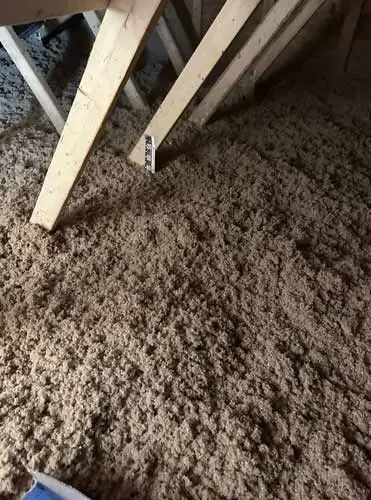
Cellulose is blown in loose, so it settles around and over the obstructions that make attics difficult. It has no seams and no cuts, which removes the entire category of failure that comes from fitting a rigid or pre-sized product around joists, cables and ducts.

For a straightforward vented attic where the insulation belongs on the attic floor, this is often exactly the right approach. It covers well, it covers cheaply, and the performance you get is close to the performance you were promised, provided the depth is right.

That last clause is doing a lot of work. Cellulose that has been installed thin, or thinned out toward the eaves, underperforms quietly and permanently. Depth checked with a rule rather than estimated by eye is the whole quality control story for this product.

The case for foam

Foam wins where the attic is not a simple floor. Cathedral ceilings have no attic floor to blow. Rooms built into the roof space have short knee walls and sloped sections where loose fill has nowhere to sit. Where the roof line itself needs to be inside the insulated envelope, a loose product cannot do the job at all.

Foam also wins where air sealing is the real objective rather than a side benefit. Closed-cell at around R-7.0 per inch gets more resistance into a shallow rafter bay than anything else will, and it seals as it goes rather than needing a separate sealing step first.

And in any assembly where moisture is a live concern, the water resistance and vapour behaviour of closed-cell change the conversation entirely.

A rough way to sort it yourself

  • Flat, accessible, vented attic floor with reasonable headroom, and nothing living up there. Cellulose is usually the value answer.
  • Sloped ceilings, knee walls, or a finished or semi-finished roof space. Foam, because there is no floor to blow.
  • Shallow rafter bays where you need the most performance out of the least depth. Closed-cell foam.
  • Mechanical equipment or ductwork in the attic that really ought to be inside the envelope. That is a foam-at-the-roofline conversation.
  • A damp or humidity problem that predates the insulation question. Neither, until that is understood.

How each one behaves over time

This is the part that rarely comes up at quote stage and matters for the whole life of the building. Loose-fill materials settle. That is normal and predictable rather than a defect, but it means the depth installed and the depth you have in fifteen years are not identical numbers, and a job that was marginal on day one will be short later.

The practical consequence is simple. If cellulose is the right product for your attic, it wants to be installed generously and to a checked depth, not to the thinnest figure anybody could defend. Doing it properly once is cheaper than topping it up later, because the second visit costs a call-out either way.

Cured foam does not settle, which is one of its quieter advantages. It is bonded to the surfaces it was sprayed against and it stays in the shape it cured in. The trade-off is that it also stays exactly where it was put, including anywhere it was put badly, and it is not a product you adjust afterwards. With foam, the install is the whole thing.

Neither of those facts makes one product better. They just mean the questions are different. With cellulose, ask about depth. With foam, ask about coverage and who is checking it.

What we will tell you

If cellulose is the better value for your building, we will say so at the assessment rather than selling you foam. That is not a marketing position, it is just the only way to be a contractor people call back. A homeowner who was talked into the expensive product for a job that did not need it will remember, and so will everyone they talk to.

It also happens to be why a lot of our commercial work is repeat work. Builders book the same crew for ten years when the recommendation matches the building rather than the invoice.

What neither of us can settle from an article is which one your attic wants. That takes somebody with their head through the hatch. Assessments across the Capital District, the Hudson Valley and the Berkshires are free, and you will get a straight answer even when the straight answer is the cheaper one.

Correct Energy Spray Foam, (518) 817-2376

Call (518) 817-2376