Capital District(518) 817-2376

Spray foam and cellulose insulation

The layer you pay to never see again

Once the drywall goes up you will never look at your insulation again, so it had better be right the first time. Seventeen years of it, across the Capital District, the Hudson Valley and the Berkshires.

Call (518) 817-2376

What the record says

Seventeen years of buildings that hold their heat

Correct Energy has been insulating homes, new builds and commercial envelopes across Albany County, the Hudson Valley, Saratoga County and Berkshire County since long before air sealing was fashionable. Ray Milnarik still runs the assessments himself.

Insulating buildings upstate

17 yrs

Insulating buildings upstate

Google rating across 6 reviews

4.3

Google rating across 6 reviews

Hubs, two states, one crew

3

Hubs, two states, one crew

Per inch, closed-cell foam

R-7.0

Per inch, closed-cell foam

A stud wall and rafter bays filled with cured closed-cell spray foam

A wall like this one is the only time anybody sees the product they bought. Twenty minutes later it is behind drywall for the life of the building.

What we install

Two products, five places they belong

Spray foam is not the right answer everywhere, and anybody who tells you it is has something to sell. Here is where each one earns its keep.

Spray foam insulation

Closed-cell at R-7.0 per inch where the building needs rigidity and a vapour barrier. Open-cell where it needs reach and quiet. Most houses want some of each, and the assessment is where we work out which is which.

Attic insulation

The attic is where most of a heating bill leaves the building. It is also the hardest place to insulate well, because the joists, the wiring and the ductwork all get in the way of anything cut to size.

Crawl spaces and basements

Cold floors are almost never a flooring problem. Foam expands into the rim joists and the gaps a fitted batt has to leave, which is why it works down here when other products do not.

Cellulose insulation

Blown in and installed to a measured depth rather than to the eye. For plenty of attics it is the better value, and we will tell you so instead of selling you foam.

Commercial buildings

Large-scale envelopes on the same rig and the same crew. Contractors have been booking us on repeat work for over ten years, which is the only commercial reference that counts.

How a house goes

One building, start to sealed

Every job runs the same three moves, whether it is a new build in Saratoga or a 1940s house in Troy with framing that fights you.

The Correct Energy box truck parked at an active job site, house wrap and framing visible behind it

At the kerb

The rig arrives with the crew

Everything needed to spray a house travels on one truck, so the job starts the morning we said it would rather than whenever a subcontractor turns up. Reviewers keep mentioning the same thing: we came when we said we would.

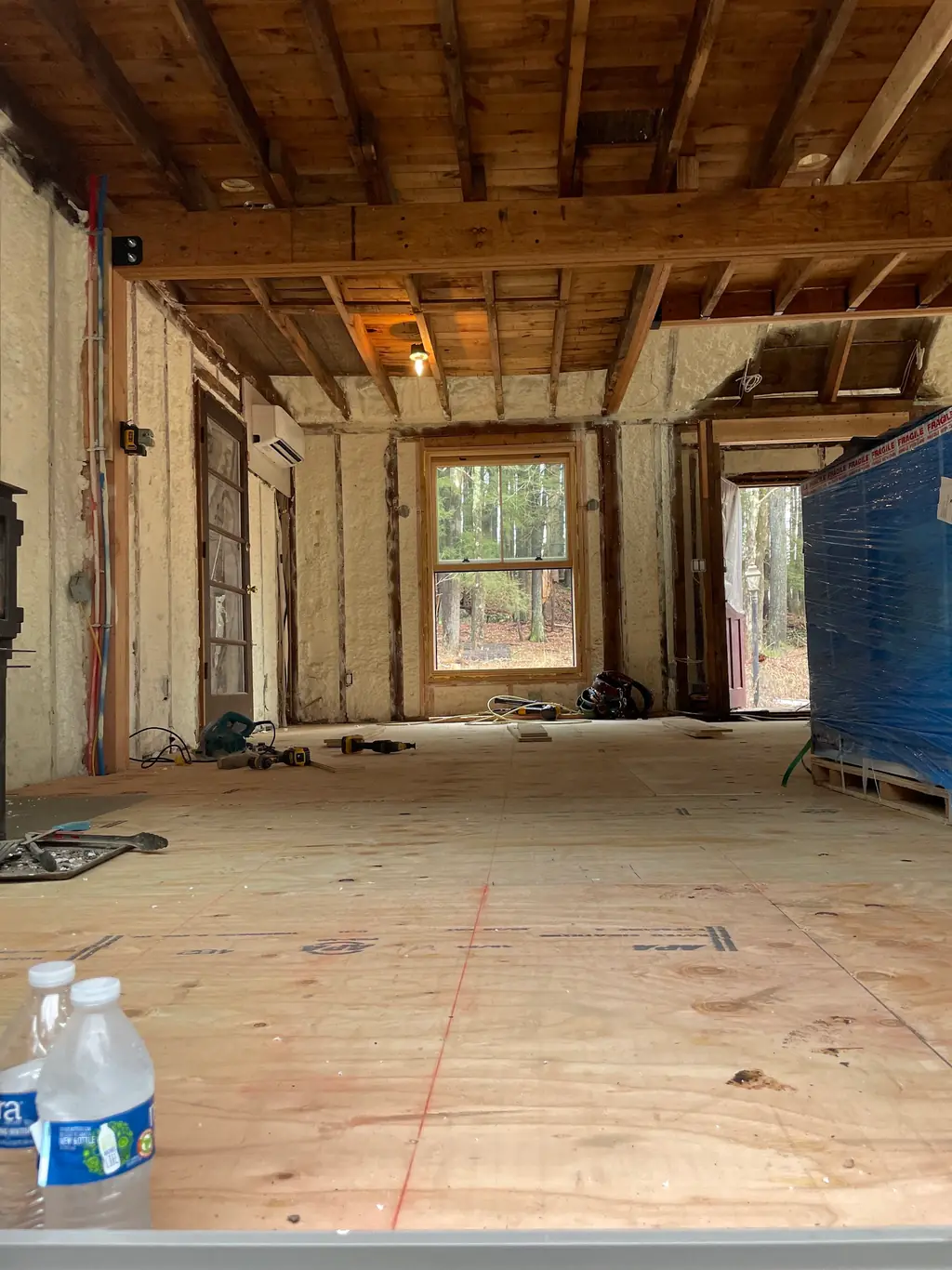
Closed-cell spray foam applied between wall studs and rafter bays of a house under construction

In the cavity

Foam goes in while the walls are still open

This is the cheapest moment in a building's life to insulate it properly, and the only moment you can see what you are buying. Closed-cell fills the stud bays and the rafter bays, seals the gaps and stiffens the frame at the same time.

Blown-in cellulose insulation in an attic with a depth-check ruler standing in it

Overhead

Cellulose laid to a measured depth

Depth is the whole job in an attic, so we check it with a rule rather than judging it by eye. If the number is short in one corner, that corner is where next winter's heat goes.

Cellulose, measured

The attic is where the bill goes

Heat leaves a building upward, so the attic is the first place worth spending money and the easiest place to do badly. We install to a measured depth and check it before we pack up.

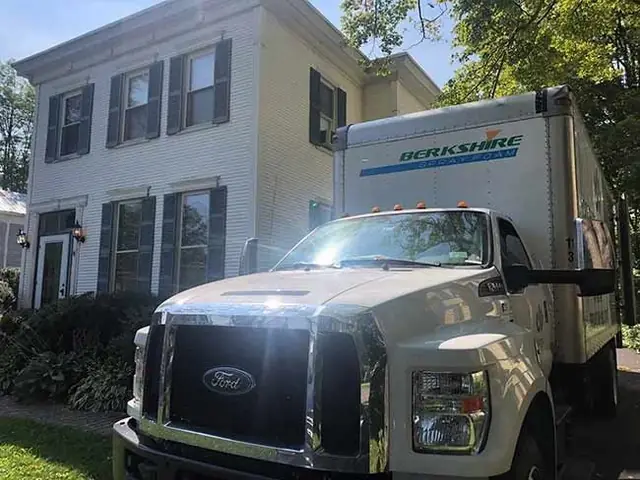
A Berkshire Spray Foam truck, the same fleet and the same crew, parked outside a home

Three hubs, one crew

The same trucks answer to three names

Correct Energy runs out of Troy. Berkshire Spray Foam is the same owner, the same rig and the same crew working western Massachusetts, and Kingston covers the Hudson Valley in between. It is one operation with three phone numbers, which is why a contractor in Pittsfield and a homeowner in Saratoga get the same job.

The Correct Energy truck at an active residential job site

4.3 on Google

What people said afterwards

Correct Energy and especially Ray's knowledge and experience were above and beyond. CE came out to assess and spent a generous amt of time explaining EVERYTHING. CE came when they said they would. The crew was professional and spent a few days here. They left everything immaculate. My place is old, built in the 1940's so many challenges came up that they handled like absolute pro's. Their work has and will continue to save so much on energy, the difference of before and after is immediate and drastic.
Rose Kennedy, Google review
I worked with Ray at Correct Energy. He was super informative and helpful in figuring out how to insulate my home. He spent significant time both giving me information and explaining things. The crew worked within some difficult time and site issues, but finished the job in the timeline. The price was great as well! I am very pleased with the service and work.
Karen Schaffel, Google review
Correct Energy is amazing! Ray and his crew came in and assessed my spray foam needs for a non conventional style new build and exceeded all my expectations. This company cares about their clientele, you cannot go wrong with choosing this company! I would give them 6 stars if I could!!
judy steele, Google review
SFB Construction has work with Correct Energy/Berkshire Spray Foam for Over Ten Years. Ray and His Team has always been Professional, Fair, Punctual and Reliable. I would Recommend Correct Energy To Every Homeowner Or Contract Looking for Quality Work.
SFB Construction, Google review

Before you call

The questions we actually get asked

Closed-cell runs about R-7.0 per inch, adds structural rigidity to the frame, resists water and acts as its own vapour barrier, so it is the one to use where temperatures swing hard. Open-cell is softer and expands further, which lets it reach into awkward cavities, and it forms an air barrier at three and a half inches. Open-cell also damps sound better and costs less. Which one your building wants depends on the cavity and the climate, and that is what the assessment is for.

Attics, crawl spaces, basements and cathedral ceilings. Those are the places air moves through a building whether you want it to or not, and they are usually the hardest to reach with batts. Because the foam expands to fill what it touches, it seals the gaps a fitted product has to leave.

Both, plus large-scale commercial. On a new build we come in once the frame and rough-ins are done and the cavity is still open, which is the cheapest moment in the building's life to insulate it properly. On an existing house we work around what is already there.

Three hubs off one phone. Green Island and Troy cover Albany County and the Capital District, Kingston covers the Hudson Valley, and Pittsfield covers Berkshire County and western Massachusetts. Saratoga and Lake George are inside the northern run.

Yes. Blown-in cellulose is the right answer for plenty of attics, and we install it to a measured depth rather than to the eye. If cellulose is the better value for your building we will say so at the assessment instead of selling you foam.

Most houses are a matter of days rather than weeks, and we tell you the window before we start. A 1940s house with awkward framing takes longer than a new build with open bays, and we would rather quote the real number than the flattering one.

Get the cavity looked at before it closes

If the frame is up and the rough-ins are done, now is the moment. If the house has stood for eighty years and the upstairs is still cold, that is worth a look too.