Capital District(518) 817-2376

Closed-cell or open-cell: which one your building actually wants

Two products that get talked about as one. They behave differently, and the difference decides where each belongs.

August 31, 2026 · 3 min read

Closed-cell or open-cell: which one your building actually wants

Almost every insulation conversation starts with somebody asking for spray foam as though it were a single product. It is two, and they are not interchangeable. Getting the choice right is most of the value in the job, and getting it wrong is expensive in a way you will not notice for several winters.

What closed-cell does

Closed-cell foam cures dense and rigid. The cells are sealed against each other, which is where the name comes from and where all of its properties come from too. It is rated around R-7.0 per inch, which is the highest figure you will get from anything sprayed into a stud bay, so it delivers the most resistance in the least depth.

That density buys three things beyond the R-value. It adds structural integrity, because a rigid foam bonded to framing stiffens the assembly it fills. It is water resistant, so it does not turn into a sponge if it meets moisture. And it acts as its own vapour barrier, which means you are not layering a separate plastic sheet over the top and hoping the installer sealed every lap.

The short version: closed-cell is what you want where temperatures swing hard, where depth is limited, or where the assembly is going to meet water at some point in its life. In this part of New York and over in the Berkshires, that covers a lot of ground.

What open-cell does

Open-cell is the soft one. It stays flexible after it cures, and it expands far more aggressively, which is exactly what you want when the space you are filling is awkward rather than tidy. It reaches into the gaps that a rigid product bridges over and a cut batt cannot get near.

It creates an air barrier at three and a half inches, which lines up neatly with a standard stud bay. It is also noticeably better at sound. If you have ever stood in a room insulated with open-cell and noticed how dead it feels, that is the product doing something a fibre batt does not. And it costs less, which matters when the area to cover is large.

How the choice actually gets made

Not by preference, and not by whichever one the contractor has on the truck. The honest answer is that most buildings want some of each, and the split falls out of the assembly rather than out of a philosophy.

  • Depth available. If the cavity is shallow and the target is ambitious, closed-cell is the only product that gets there.
  • Moisture exposure. Rim joists, crawl spaces and anything below grade lean closed-cell for the water resistance and the vapour behaviour.
  • Awkward geometry. Cathedral ceilings, odd framing and old houses that were never square favour a product that expands to fill what it finds.
  • Sound. Interior partitions and rooms over garages are where open-cell earns its place for reasons that have nothing to do with heat.
  • Budget across the whole envelope. Spending everything on the highest R-value in one assembly while leaving another one bare is a worse result than a sensible split.

The part nobody tells you

The single biggest variable is not which foam you pick. It is whether the person spraying it can see what they are doing and has the time to do it properly. Foam is installed once, behind a finish, forever. There is no coming back to touch up the corner nobody could reach.

That is why a real assessment matters more here than in most trades. Somebody has to look at the actual cavity, the actual framing and the actual moisture story of the building before recommending anything. A quote given over the phone from a square-footage number is a guess wearing a suit.

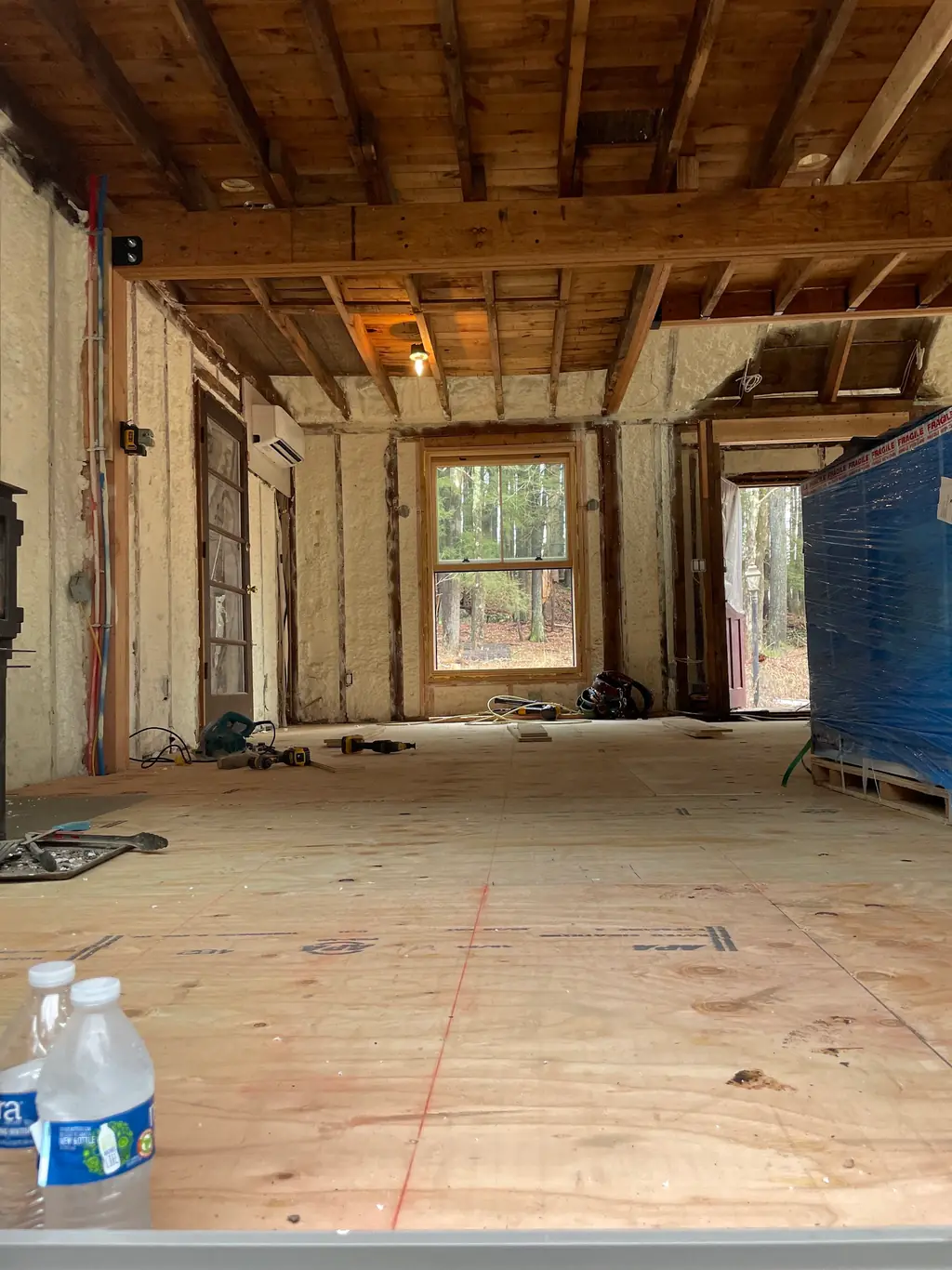
One of our customers put it well after we finished a house built in the 1940s. Plenty of complications came up, because they always do in a house that age, and the crew worked through them rather than around them. That is the difference between a product and an installation.

If you are weighing this up for your own building, the useful next step is not more reading. It is having somebody stand in the space and tell you what it needs. We do that at no charge across the Capital District, the Hudson Valley and Berkshire County, and Ray usually does it himself.

Correct Energy Spray Foam, (518) 817-2376

Call (518) 817-2376